
Commercial door hardware
Panic Bar and Door Closer Repair in Philadelphia
An exit door that won't latch at night, a panic bar that takes a shove to open, a closer that slams the door into the frame. Mike Schiavone repairs or replaces panic hardware, door closers, locks and lever sets for businesses across Northeast Philly and lower Bucks.
- SAVTA member
- ALOA member
- Owner-operated: you talk to Mike
- Mobile: Mike comes to you
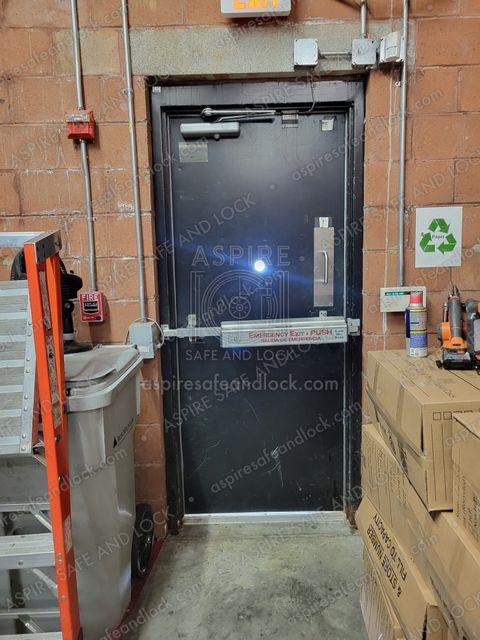
Short answer: Mike repairs or replaces panic bars, door closers, locks and lever sets on commercial doors. If an exit door won't latch, a panic bar sticks, or a door slams or drifts open, call or text a photo of the hardware to (661) 927-7473, or email it to info@aspiresafeandlock.com.
What Mike handles
His old commercial copy put it simply: he identifies and resolves "KEY" issues, "such as repairing or replacing panic hardware, door closers, locks and lever sets." That covers most of what goes wrong on a business door:
- Panic bars that stick, won't latch, or have a dead outside trim or cylinder
- Door closers that slam, drift, leak or have come loose from the frame
- Locks and lever sets that are worn, loose or no longer lock
- Storefront doors with narrow aluminum frames and their own style of lock
Panic bars
A panic bar, also called panic hardware or an exit device, lets anyone leave by pushing a bar across the door. No key, no knob, no thinking about it. That's why they're on exit doors in stores, offices, restaurants, schools, churches and anywhere people gather.
There are a few common types. A rim device latches at the edge of the door into a strike on the frame. A mortise device has its latch inside the door. Vertical rod devices latch at the top and bottom, often on double doors. The type matters when parts need replacing.
Signs a panic bar needs work:
- The door closes but doesn't latch, so it can be pulled open from outside
- The bar sticks, or takes a hard push to release
- The outside lever, pull or key cylinder no longer works
- The bar or rods are bent from the door being forced or propped
An exit door that won't secure at night is a security problem. One that won't open easily is a safety problem. Either is worth fixing quickly.
Fire exit doors
Fire-rated doors are built to hold back fire and smoke, but only when they're closed and latched. That's why a fire door needs a working closer and hardware that latches every time. Hardware on a fire-rated door is labeled fire exit hardware, and unlike some ordinary panic bars, it can't be mechanically held in the unlatched position. Propping, wedging or tying a fire door open defeats it.
If you're not sure whether a door is fire-rated, or what your building needs, your fire marshal or code official has the final word. Mike's part is making sure the hardware on the door works the way it's meant to.
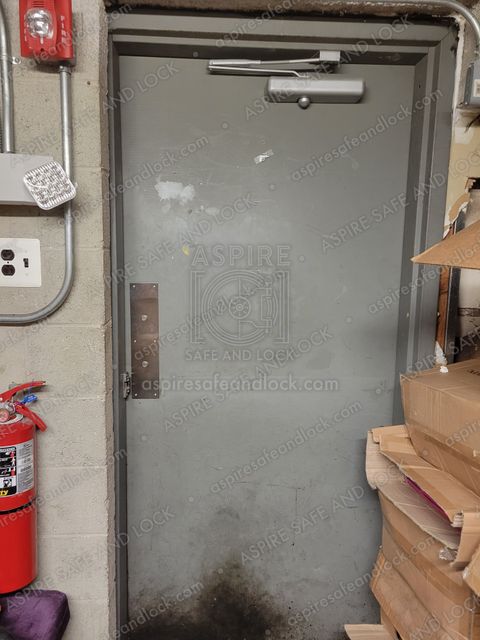
Door closers
A door closer controls how a door swings shut. Inside is a spring and hydraulic fluid, with valves that set how fast the door closes and how hard it snaps shut at the end.
- Door slams: usually an adjustment. The closing speed or latch speed is set too fast.
- Door drifts and never latches: also often an adjustment, or a closer that's too weak for the door.
- Oil on the closer or the floor: the seals have failed, and the closer needs replacing.
- Arm or closer pulling away from the frame: loose or stripped mounting, which gets worse fast.
On a back door or fire door, a closer that doesn't pull the door shut leaves the building unsecured, often without anyone noticing.
Locks, lever sets and storefront doors
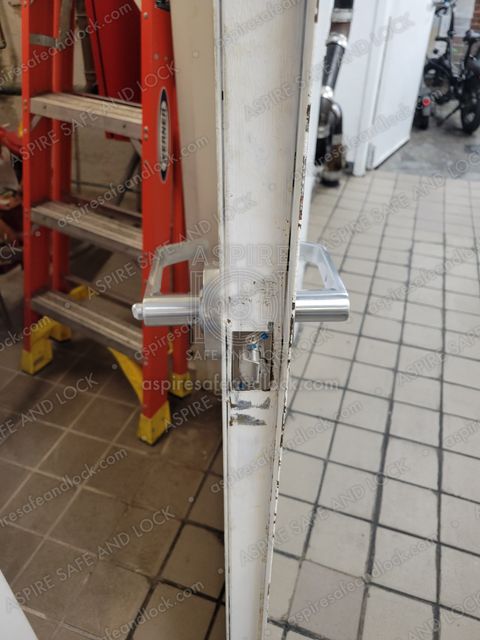
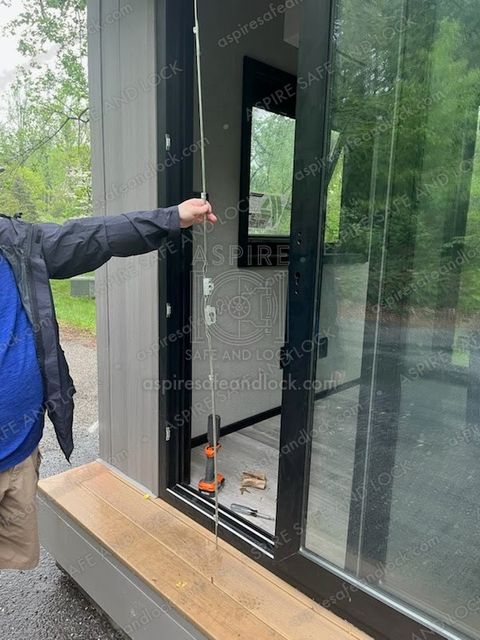
Commercial lever sets see far more use than anything in a house, and they're made in grades for that reason, with Grade 1 the heaviest duty. A worn lever droops, a loose one wobbles, and eventually the lock stops working when it's locked. Glass storefront doors use narrow aluminum frames with their own locks and cylinders, which need parts made for them.
When keys need to change too, Mike can rekey the locks or set the building up on a master key system.
What to send Mike
- A photo of the hardware, including any brand name on the bar or closer.
- What it's doing: not latching, sticking, slamming, leaking.
- Whether it's a fire exit or a door with a fire rating label on its edge.
- When the door can be worked on without disrupting customers.
Text the photo to (661) 927-7473 or email it to info@aspiresafeandlock.com. For everything else on business doors, see commercial locksmith.
Questions people ask
Can you repair or install a panic bar?
Yes. Repairing or replacing panic hardware is part of Mike's commercial work, including installing a panic bar at your place of business.
Why won't my exit door latch?
Usually the panic bar's latch is worn or out of adjustment, the strike has shifted, or the door closer isn't pulling the door all the way shut. Often it's the closer.
Why does my door slam?
A door closer controls the closing speed with adjustable valves. When it's out of adjustment the door slams, and when it leaks oil it has usually failed and needs replacing.
Can I keep my fire exit door open with the panic bar held down?
Not on a fire-rated door. Fire exit hardware isn't allowed to be held open that way, because the door has to close and latch to stop fire and smoke. Ask your fire marshal or code official about your specific doors.
Tell Mike what's going on
Locked out right now? Call. It's the fastest way. For a safe that isn't an emergency, or for business and bank work, send the details below or text a photo of the safe and its lock to (661) 927-7473 or email it to info@aspiresafeandlock.com.
Business hours: Monday to Friday, 9am to 5pm (closed weekends and holidays). Emergency service is available 24 hours.