
Key control for buildings
Master Key Systems for Philadelphia Businesses
Too many keys, too many people, and nobody sure who can open what. A master key system gives every key a defined level of access, with one key for the owner that opens everything. Mike Schiavone designs them around how your building is actually used.
- SAVTA member
- ALOA member
- Owner-operated: you talk to Mike
- Mobile: Mike comes to you
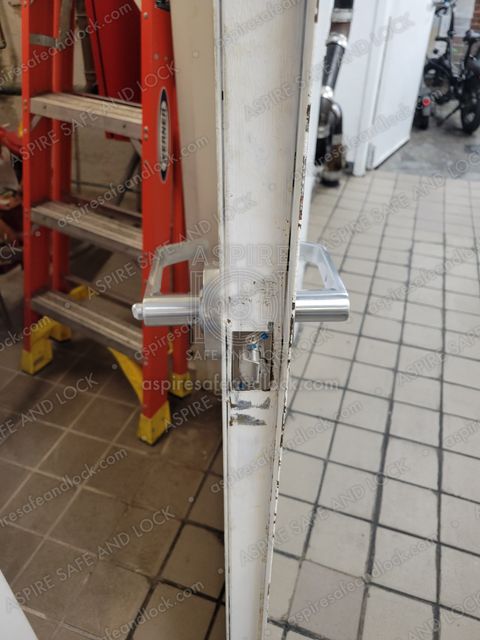
Short answer: a master key system lets each person carry one key that opens only what they need, while the owner or manager carries a key that opens everything. Mike builds master key systems tailored to your specific needs. Call or text (661) 927-7473 to talk through your building.
How a master key system is set up
A master key system is a hierarchy of keys:
- Change keys open one door or one area, such as a single office, apartment or classroom.
- Sub-master keys open a group of doors, such as one floor, one wing or one department.
- A master key opens every lock in the system.
- A grand master sits above several master systems, for owners with more than one building or a very large one.
Most small businesses need only two or three of those levels. The point is to fit the system to the building, not the other way around.
Who uses master key systems
- Offices, where staff need their own office and common areas, managers need their department, and the owner needs everything.
- Apartment buildings, where each tenant's key opens their unit and the shared entrance, and the landlord or super has a key for every unit.
- Schools, where teachers open their own rooms and custodial staff and administrators open more.
- Churches, where volunteers, staff and clergy each need different rooms on different days.
- Stores and restaurants, where the stockroom, office and front door don't all need the same people.
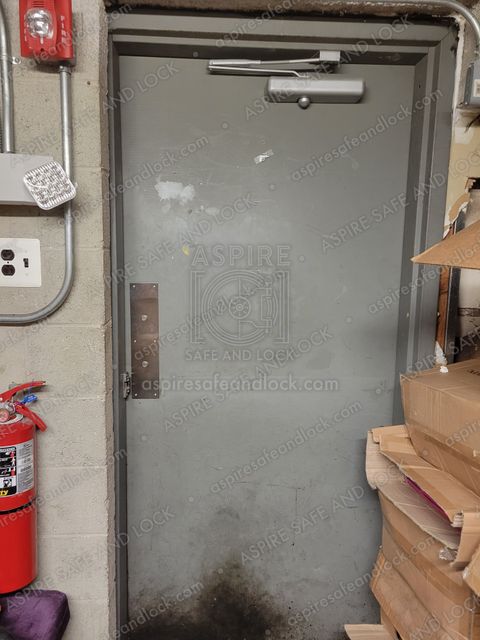
Planning a system
A system tailored to your specific needs starts from how the building is used. A planning conversation usually covers:
- Every door and lock, including closets, gates and back doors
- Who needs to get where, and at what times
- Which doors should open with as few keys as possible
- How many keys go out at each level
- Who keeps the key record, and how keys come back when people leave
The result is a key schedule: a written plan of which key opens which lock. Keeping that record current matters as much as the locks. A system nobody tracks drifts back into "nobody knows who has what."
File cabinets and the small locks
Missing or broken keys for your work compliance file cabinets? Offices that keep records in locked cabinets often lose track of those keys first, because they're small, they look alike, and nobody labels them. Mike handles missing and broken file cabinet keys so drawers don't get forced and cabinets don't get thrown out.
When a key goes missing
If a key goes missing, Mike can rekey the locks it opens.
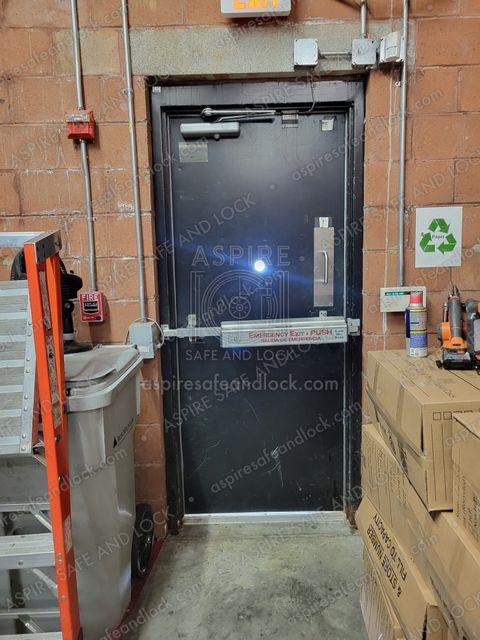
When an employee leaves with a key and you don't have a system yet, that's often the moment to set one up. Mike also handles the rest of the door: panic bars and door closers, locks and lever sets. And since he's a safe specialist, he can change the combination on the office safe at the same time.
Questions people ask
What is a master key system?
A set of locks keyed so that each person's key opens only the doors they need, while a master key opens every lock in the system. Larger systems add levels in between, such as a key for one floor or one department.
Do I have to replace all my locks?
Not necessarily. It depends on the locks you have. Mike can tell you when he sees them.
Is a master key system less secure?
Every master-keyed lock opens with more than one key, so a lost master key is a serious event. A well-planned system keeps the number of master keys small and records who holds them.
Tell Mike what's going on
Locked out right now? Call. It's the fastest way. For a safe that isn't an emergency, or for business and bank work, send the details below or text a photo of the safe and its lock to (661) 927-7473 or email it to info@aspiresafeandlock.com.
Business hours: Monday to Friday, 9am to 5pm (closed weekends and holidays). Emergency service is available 24 hours.