
Estate and antique safes
Inherited and Antique Safes Opened in Philadelphia
A parent's safe nobody has the combination to. A heavy box in the basement of a rowhome you just bought. A painted antique on casters that's been in the family for a century. Mike opens and services old and inherited safes. Safes and vaults are where, in his words, he found his passion.
- SAVTA member
- ALOA member
- Owner-operated: you talk to Mike
- Mobile: Mike comes to you
Short answer: look for the combination in the paperwork first. If it isn't there, have the right documents ready to show you're entitled to open the safe, then call a safe specialist. Don't pry, drill or cut the hinges on an old safe yourself. Cutting the hinges won't open the door, and forcing it can damage the contents and ruin a safe that may have real value.
A safe from a parent's estate
When someone passes away, their safe often holds exactly what the family needs: the will, deeds, titles, insurance papers, cash, jewelry. And often nobody else knows the combination.
- Search for the combination. Check desk drawers, address books, old planners, the back of picture frames, and the safe's original box or manual. People hide combinations in plain sight.
- Gather your documents. See the list below.
- Plan for the opening. If you're the executor, it's sensible to have a second family member present and to photograph and list what's inside.
What documents might an executor or new homeowner need?
Anyone opening a safe on someone else's behalf should expect to show they have the right to. In general, that can mean:
- Executors and administrators: a death certificate, and the letters testamentary or letters of administration issued by the county Register of Wills, plus photo ID.
- Heirs without an estate opened yet: talk to the estate's attorney or the Register of Wills about what you need before anyone opens the safe.
- New homeowners: the deed or settlement paperwork for the property where the safe was found, plus photo ID.
Found a safe in your house or rowhome?
Safes turn up in Northeast Philly rowhomes, twins and older houses: bolted in a basement corner, set into a closet floor, behind a panel. Sometimes the previous owner left the combination with the paperwork at settlement. Often they didn't.
Before you call, take clear photos of the whole safe door, the handle and the dial, plus the hinges and caster wheels on an older safe, and photos above, below and on each side so Mike can see the room he has to work. Note any name or maker's lettering on the door. Text them to Mike at (661) 927-7473 or email info@aspiresafeandlock.com. An honest note: most found safes hold papers or nothing at all. It's still worth opening one properly, because a working safe is useful and an old one may be worth keeping.
Antique safes Mike has worked on
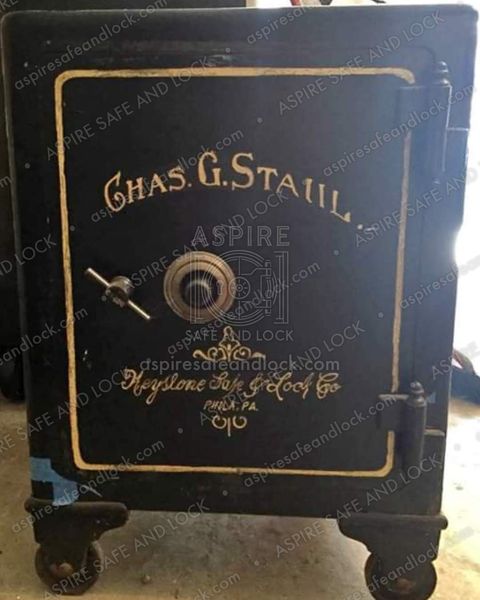
- A J. Baum safe on iron casters, with a dial lock and T-handle. The door is lettered "Keystone Safe & Lock Co., Phila. PA," with the name Chas. G. Stahl painted across the top. The name painted on old safes like this was usually the original owner or business.
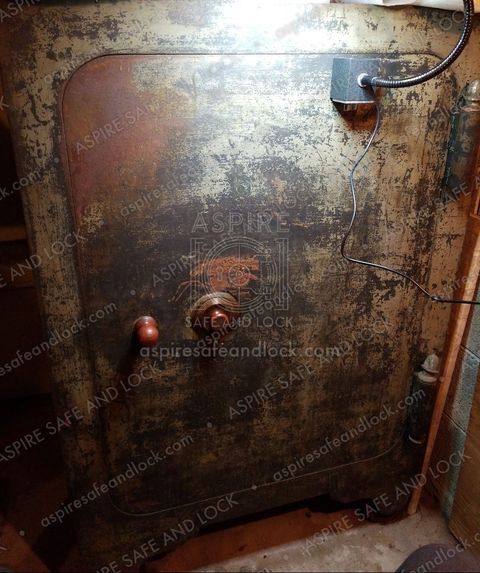
- A Diebold safe with a dial lock, rusted from years in a basement.
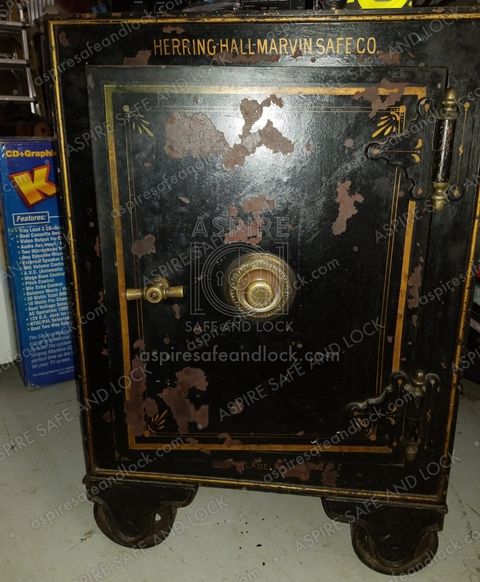
- A Herring-Hall-Marvin safe on casters, with its maker's name across the top.
His interest goes back to bank work. In his own words: "I was already crazy about locks and keys, but those antique bank vaults are something else." He has worked on round bank vault doors dated 1915. See bank and vault services.
Why old safes still work
Mechanical safe locks are EMP-proof and built like tanks. It's rare for one to fail, and a well-maintained mechanical lock lasts for many, many years. That is why antique safes and antique bank vaults are still around and still in working condition.
What doesn't help: spraying WD-40 or any lubricant into the dial or the lock. If an old dial feels tight or sluggish, have it serviced before it fails.
The makers behind old safes in Philadelphia
Philadelphia was a real safe-making city, which is part of why so many old safes still turn up here. Safes from out-of-town makers were sold here too:
- Farrel. The Farrel safe company of Philadelphia, later Farrel-Herring, became part of Herring-Hall-Marvin.
- Milnor & Shaw advertised "Phoenix Fire & Thief Proof Iron Safes" in Philadelphia in 1851.
- Samuel Hart & Co. made strongboxes in Philadelphia and New York around 1860.
- York Safe & Lock Co., founded in York, PA in 1882, built bank vaults that went into Philadelphia banks.
- Diebold. Founded in Cincinnati in 1859 and later moved to Canton, Ohio. Diebold went on to become one of the biggest names in bank vaults and ATMs, and Mike later worked for the company.
- J. Baum Safe & Lock Co. of Cincinnati. The J. Baum safe at the top of this page carries a Philadelphia company's lettering.
Old safes are also a reminder of why method matters. In 2021, a locked York Safe & Lock safe at Old Pine's community center in Philadelphia was opened destructively by firefighters after locksmith quotes came in too high, as the Inquirer reported.
Should an antique safe be restored?
That depends on what you want it for. Some owners want a working safe again, with a serviced or replaced lock. Others want it preserved as a piece of history, original paint and all. Either way, don't sandblast, strip or repaint it before getting an opinion, because original lettering and paint are a big part of what makes an old safe special.
Ready to get it open? Call or text Mike at (661) 927-7473, or read more about safe opening first.
Questions people ask
How do I open an inherited safe with no combination?
First search the paperwork. Combinations turn up in desk drawers, address books, file folders and taped inside cabinets. If it isn't there, a safe and vault specialist can open the safe, repair it and set a new combination.
Can I get the combination from the manufacturer of an antique safe?
Almost never. The companies that built antique safes are out of business, or their records are long gone. An antique safe with a lost combination needs a safe specialist.
What documents do I need to open a deceased parent's safe?
It varies, but executors and administrators are often asked for the death certificate and the letters testamentary or letters of administration from the Register of Wills, plus their own ID.
We found an old safe in a house we bought. Can you open it?
Yes. Safes left behind in houses are a common call. Having your deed or settlement papers handy helps show the house, and what came with it, is yours.
Is my antique safe worth anything?
Some are, mostly for display or to collectors, depending on the maker, condition, paint and whether it still works. Mike can tell you what he sees, but for a value, ask an antiques appraiser. Don't strip or repaint it before you do.
Will opening an antique safe ruin it?
Not when it's done right. Mike opens safes in the least destructive way he can, then repairs them correctly so they go back into service. Mechanical locks on old safes are built like tanks, which is why so many of them still work a century later.
Tell Mike what's going on
Locked out right now? Call. It's the fastest way. For a safe that isn't an emergency, or for business and bank work, send the details below or text a photo of the safe and its lock to (661) 927-7473 or email it to info@aspiresafeandlock.com.
Business hours: Monday to Friday, 9am to 5pm (closed weekends and holidays). Emergency service is available 24 hours.