
Consumer guide
How to Spot a Locksmith Scam
Locksmithing has a well-documented scam problem, and it hits people when they're locked out and in a hurry. Here's how the scheme works, the red flags to listen for on the phone, and how to check out a locksmith in Philadelphia and Bucks County before you need one.
- SAVTA member
- ALOA member
- Owner-operated: you talk to Mike
- Mobile: Mike comes to you
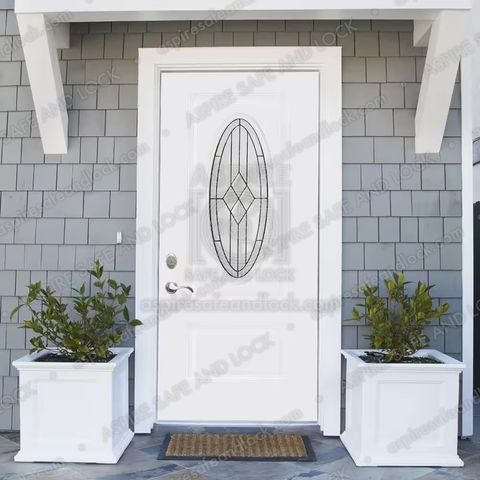
Short answer: the classic locksmith scam starts with a very low phone quote from a listing that looks local, then an unmarked car, someone who wants to drill a house lock right away, and a bill several times the quote. A legitimate locksmith answers with a company name, tells you how the job will be priced, shows ID and hands you an itemized invoice.
How the scam works
The pattern has been documented for more than a decade. A New York Times investigation in January 2016 described operators who plant fake addresses on Google Maps in every metro area. The calls all go to one out-of-region call center, which sends whatever subcontractor is free. Phone quotes ran $35 to $90, and on site the subcontractor demanded three or four times that.
The lowest hook is the "$19 service call." The total is never $19. Once someone is at your door, the job turns out to be "more complicated than expected," the lock gets drilled, and the price climbs from there.
Mike Schiavone runs into this pattern in his own market. Many of these listings run as a single call center, with a string of company names all feeding the same phone line, and the work gets divided up from there.
How big the problem is
- The research. A 2017 study by UC San Diego and Google, "Pinning Down Abuse on Google Maps," found that about 40% of fake Maps listings were contractors such as plumbers and locksmiths, and that 11% of locksmith search results were fraudulent. Google reported a 70% drop from the June 2015 peak.
- Google's lawsuit. On March 19, 2025, Google announced a lawsuit in federal court in Northern California against the owner of a Maryland locksmith business. Google said it had removed more than 10,000 fake or hijacked listings, mostly locksmiths and towing. The scheme routed calls through a lead generation service, inflated prices on site and sold fake reviews.
- State warnings. Ohio's attorney general sued an operation that used local-sounding names, routed calls to an out-of-state call center, quoted $19 and charged far more. Connecticut's Department of Consumer Protection issued a fresh warning about fake locksmiths in July 2026.
Google has made progress, but fake listings still get through, especially on phones, where results lean heavily on how close a listing appears to be.
Red flags on the phone and at the door
- The phone is answered "locksmith" or "locksmith services," not a company name.
- A "starting at" quote of $19 to $35, with no real total.
- A generic or keyword-stuffed business name like "24 Hour Locksmith."
- An unmarked car, no uniform and no ID.
- "It's more complicated than I thought" followed by drilling a house lock.
- Cash or debit only, and no written invoice.
What a legitimate locksmith does
- Answers with a company name, and ideally you're talking to the person who will do the work.
- Tells you how the job will be priced before driving out.
- Shows ID and arrives in a branded vehicle.
- Gives an itemized invoice with the business name and address.
- Takes cards.
Pennsylvania has no locksmith license
This surprises a lot of people. Pennsylvania doesn't license locksmiths, and Philadelphia has no city locksmith license either. Every business operating in Philadelphia needs a Commercial Activity License, but that isn't a locksmith credential. So when a Pennsylvania locksmith advertises as "licensed," it doesn't tell you much. Ask what the license is for.
The credentials you can actually check are trade association memberships. ALOA's requirements for active membership include time in the industry, references and a background check.
How to check a locksmith in Philadelphia and Bucks County
- Look for a real business. A mobile locksmith doesn't need a storefront, but there should be a named owner, a local presence and a working website. A Maps address that turns out to be a restaurant, an empty lot or a random apartment is a warning.
- Search the trade directories. The SAVTA safe tech search lists members of the Safe & Vault Technicians Association. ALOA's FindALocksmith.com lists ALOA members. ALOA itself tells consumers to ask whether a locksmith is a member.
- Read the reviews for names. Real customers tend to name the person who helped them. Short bursts of vague five-star reviews are a warning sign.
- Check the Better Business Bureau for the business name and address.
- Save a number now. The best time to choose a locksmith is before you're standing outside a locked door.
Where Mike fits
Aspire Safe and Lock is one person with one number. When you call (661) 927-7473, you're talking to Mike Schiavone, the owner, who is based in Mayfair in Northeast Philadelphia. There's no call center and no subcontractor.
- Listed in the SAVTA safe tech search and on FindALocksmith.com as an ALOA member. Search zip code 19136 to find him.
- Most of Aspire's reviews name Mike, because he's the one who did the work. Read them here.
- Credit cards are accepted, with a 3.8% card processing fee.
- His specialty is safes and vaults, with a background in bank equipment. See about Mike.
Wondering how a fair quote works? See how Mike prices a safe opening.
Questions people ask
Do locksmiths need a license in Pennsylvania?
No. Pennsylvania has no statewide locksmith license, and Philadelphia has no city locksmith license. Businesses operating in Philadelphia need a Commercial Activity License, which every kind of business gets. So a Pennsylvania locksmith who says "licensed" isn't referring to a locksmith license. Ask what the license is.
How do I know if a locksmith is legit?
Look for a business name when they answer, how the job will be priced, a named person behind the business, reviews that mention that person, and membership you can verify, such as a listing in the SAVTA safe tech search or ALOA's FindALocksmith.com.
A locksmith without a storefront. Is that a scam?
Not by itself. ALOA notes that legitimate locksmiths can be mobile-only without a storefront. What matters is whether you can verify who they are: a business name they answer the phone with, a website, reviews that name the person, and membership you can look up.
The price went up when the locksmith arrived. What should I do?
Ask for the total in writing before any work starts. If it's far above the phone quote and you haven't agreed to the work, you can say no. Paying by card and getting an itemized invoice with the company's name and address gives you a record if something goes wrong.
Is it a red flag if a locksmith wants to drill right away?
On a house lock, often yes. Consumer warnings from ALOA and state regulators list drilling first as a common sign, and most house locks can be opened or replaced without drilling. Safes are different. On most safes, drilling and then repairing the safe correctly is the most time-efficient way in.
How do I report a fake locksmith listing on Google Maps?
Google has a Business Redressal Complaint Form for listings with fraudulent or misleading names, phone numbers or addresses. For a small correction, use "Suggest an edit" on the listing instead.
Tell Mike what's going on
Locked out right now? Call. It's the fastest way. For a safe that isn't an emergency, or for business and bank work, send the details below or text a photo of the safe and its lock to (661) 927-7473 or email it to info@aspiresafeandlock.com.
Business hours: Monday to Friday, 9am to 5pm (closed weekends and holidays). Emergency service is available 24 hours.