
Keypads and lock upgrades
Electronic Safe Lock Repair and Upgrades in Philadelphia
Keypads are convenient until they stop working. Mike opens safes with failed electronic locks, installs new locks and keypads, and converts safes from dial to keypad or back again. Here's why keypads fail, what a replacement involves, and how to choose between a dial and a keypad.
- SAVTA member
- ALOA member
- Owner-operated: you talk to Mike
- Mobile: Mike comes to you
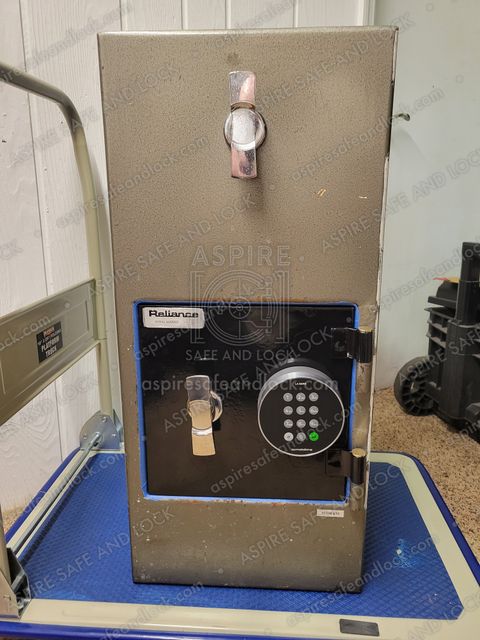
Short answer: electronic safe locks have a working life of about ten years from the date they were made. If yours is past that, has no date sticker, or is starting to act up, replace the lock and keypad together before it locks you out. If it has already failed, Mike opens the safe and fits a new lock and keypad so the safe goes straight back into use.
Why do safe keypads fail?
Most failures to open are battery related. If the battery and the wires are good and the keypad still won't work, the keypad or the lock may have failed. Age matters too: see the ten-year rule below. Mike's troubleshooting list is on the safe won't open page.
The ten-year rule
This is what Mike tells every customer with an electronic safe lock. Electronic locks have about a ten-year life from the manufacture date, and every electronic lock should have a manufacturer sticker showing that date. If the sticker is missing, the lock is more than ten years old, or it starts showing problems, the lock and the keypad should both be replaced.
Any of those three is a ticking time bomb waiting to cause a lockout. It is much easier and cheaper to replace a safe lock and keypad before it becomes an emergency.
What happens when the electronic lock has failed?
If the keypad won't open the safe no matter what, the safe has to be opened another way, and then the failed parts get replaced. On many of Mike's jobs, that means the customer's safe is opened and a new lock and keypad are installed.
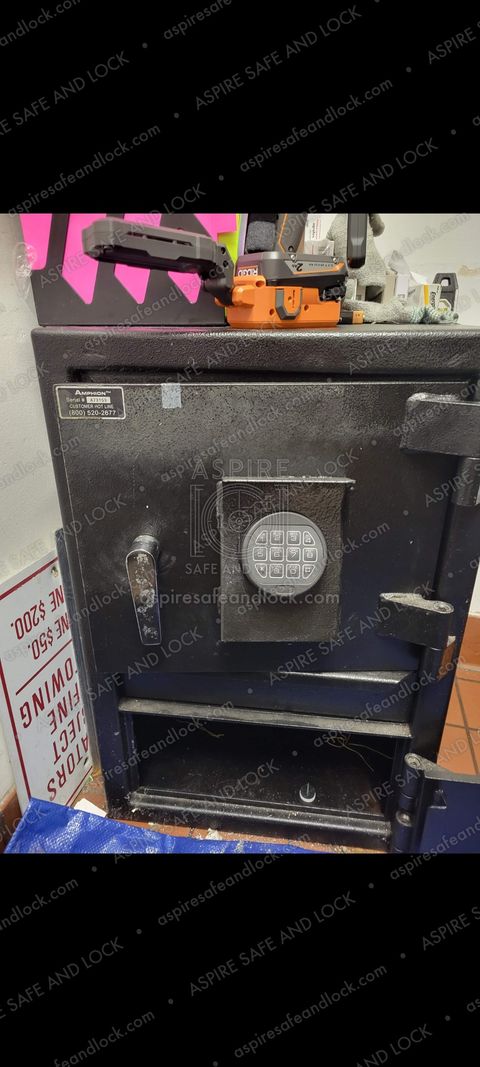
On one store safe with a separate lower compartment, Mike opened the safe and installed a new lock and keypad on the bottom door. That's the goal of any lockout: a safe that works again, not just an open door.
Dial to keypad, or keypad to dial?
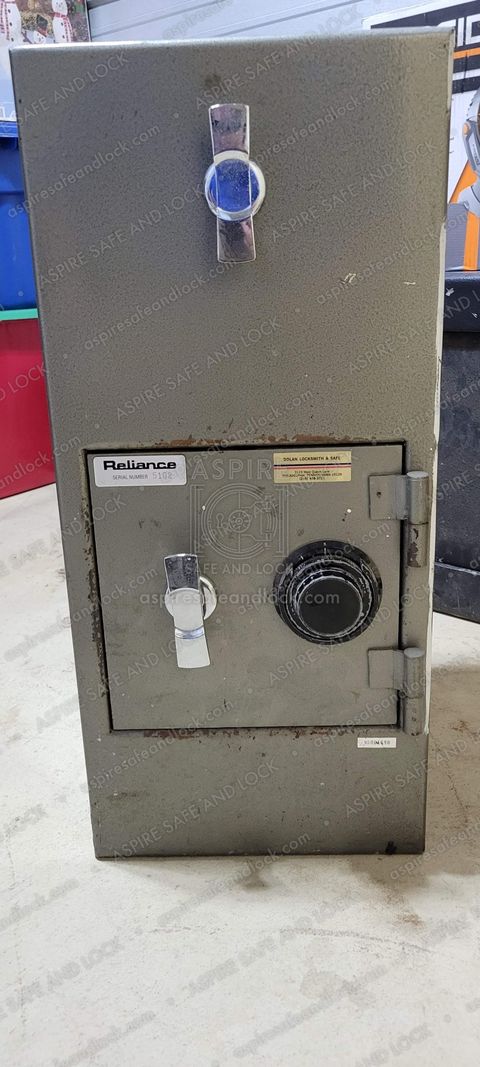
Most safe locks mount to the door with a standard footprint, so on many safes one type can replace the other. Lock upgrades are one of Mike's safe services, on deposit safes with both dial locks and keypad locks.
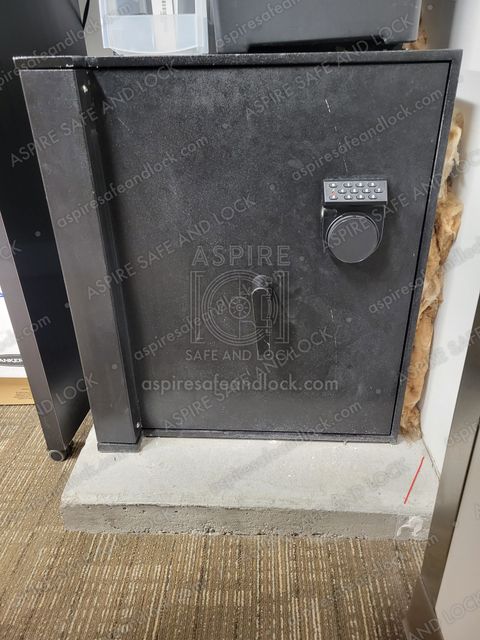
Why people switch to a keypad: it's faster to open, there's no dialing procedure to get wrong, codes are easy to change, and many commercial keypads support multiple user codes, time delays and audit trails.
Why people switch back to a dial: they've been locked out by a dead keypad once and don't want it to happen again, the safe sits somewhere damp or rarely used, or they simply trust a mechanical lock more.
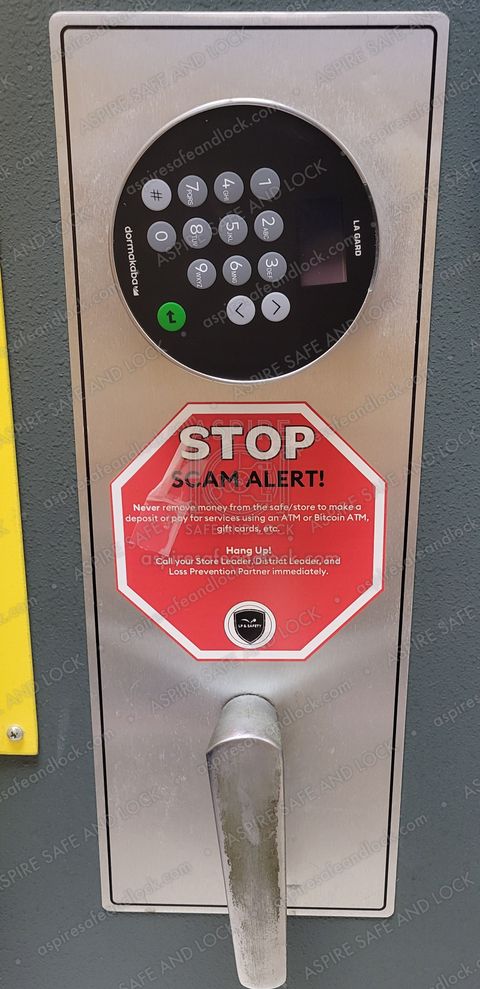
Mechanical vs. electronic safe locks
Mechanical locks are EMP-proof and built like tanks. It's rare for one to fail, and a well-maintained mechanical lock lasts for many, many years, which is why antique safes and bank vaults still work. A few facts that surprise people:
- Most safes don't have a key override. If your safe has a keypad, don't assume there's a backup key.
- A mechanical combination can run in dual control. The combination is split between two people, so neither can open the safe alone.
- Standard mechanical locks don't have extra features. Special features come with special-purpose locks and dials. Government locks, for example, are designed to resist manipulation and X-ray.
| Mechanical dial | Electronic keypad | |
|---|---|---|
| Speed | Slower. The combination has to be dialed carefully | Fast. Enter the code and turn the handle |
| Power | None needed | Batteries. Needs regular replacement |
| Working life | Many, many years when maintained | About ten years from the manufacture date |
| Multiple users | Dual control: the combination split between two people | Many models allow separate user codes |
| Extra features | Only on special-purpose locks, like government locks built to resist manipulation and X-ray | Lockout after wrong codes, and on commercial models time delays and audit trails |
There's no single right answer. A home gun safe opened a few times a month and a store safe opened by six employees every day have very different needs. Mike can talk through the options when he sees the safe.
Keypads on business safes
Deposit safes, drop safes and under-counter teller safes often run electronic locks, sometimes two on one safe. A failed keypad at a business means the day's cash or the change fund is stuck. Mike's background includes under-counter steel, ATMs and teller cash recyclers. When a local business needs its safe repaired, he installs the new parts and services the safe so it's working good as new More on the business and ATM safes page.
How to make an electronic lock last
- Use Duracell Procell or Energizer Industrial batteries, with an expiration date at least five years out.
- Don't play with the wires or a broken battery connector. Call instead.
- Never spray WD-40 or any lubricant into the keypad or the lock.
- Book preventive maintenance once a year.
- Check the manufacture date sticker, and replace the lock and keypad at about ten years.
For gun safes specifically, see gun safe service. To book a repair or upgrade, call or text Mike at (661) 927-7473 with a photo of the lock, or email the photo to info@aspiresafeandlock.com.
Questions people ask
How long does an electronic safe lock last?
About ten years from the manufacture date. Every electronic lock should have a manufacturer sticker with that date. If the sticker is missing, the lock is past ten years, or it starts acting up, replace the lock and keypad together before it causes a lockout.
Should I replace just the keypad or the whole lock?
When an electronic lock is old or failing, Mike replaces the lock and keypad together. Replacing one half of an aging lock leaves the other half waiting to fail.
Can I change my safe from a dial to a keypad?
In most cases, yes. Many safes take standard-footprint locks, so a dial lock can be swapped for an electronic one, or the other way around. Lock upgrades are one of Mike's safe services.
Which is more reliable, a dial or a keypad?
Mechanical locks are EMP-proof and built like tanks, and it's rare for one to fail. A keypad is faster and easier to use, but it depends on batteries and electronics and has a working life of about ten years. Neither is wrong. It comes down to how you use the safe.
How much does a new safe lock and keypad cost?
It depends on the lock and the safe. Replacing a lock before it fails is much easier and cheaper than an emergency opening. See how Mike prices safe work.
Tell Mike what's going on
Locked out right now? Call. It's the fastest way. For a safe that isn't an emergency, or for business and bank work, send the details below or text a photo of the safe and its lock to (661) 927-7473 or email it to info@aspiresafeandlock.com.
Business hours: Monday to Friday, 9am to 5pm (closed weekends and holidays). Emergency service is available 24 hours.